
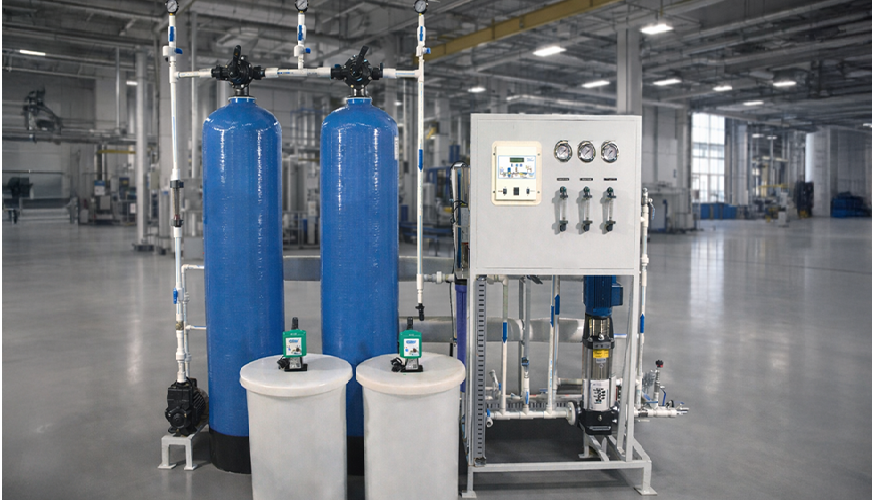
The right RO plant capacity depends on how much purified water your office or factory actually uses, not just the number of people working there. Daily water demand, peak consumption, source water quality and future expansion all influence the capacity required. While RO plant price is an important consideration, selecting a plant that matches operational requirements usually delivers better performance and avoids unnecessary upgrades later.
The reality is that water consumption has very little to do with headcount alone. A corporate office may see steady demand throughout the day, while a factory could have hundreds of people reaching for drinking water within a short window during shift changes. Add a cafeteria, a commercial kitchen or a production process that also requires purified water, and the requirement changes again.
That is why choosing the right RO plant starts with understanding how water is actually used, rather than simply looking at capacity numbers.
Factors to Consider Before Choosing the Right RO Plant Capacity
1. Daily Water Consumption: Start with Actual Usage
The first estimate usually comes from the daily water requirement. Employee strength gives a broad indication, but it should not be treated as the final figure. Visitors, pantry usage, cafeterias and process water requirements can all increase the demand.
The timing of consumption also matters. In many factories, water demand rises during shift changes. Office buildings, on the other hand, tend to have a steadier consumption pattern throughout the day. Capacity calculations should account for both.
2. Feed (Source) Water Quality: Let the Water Report Guide the Design
The water report is often reviewed before considering making an investment in the RO plant itself.
Municipal supply, borewell water and tanker water rarely require the same treatment because the TDS level, hardness and suspended impurities differ from one source to another. The report indicates whether pretreatment stages such as multimedia filtration, activated carbon filtration or cartridge filters will be required before reverse osmosis.
Read More: Crafting Experiences That Make Brands Memorable
No two installations begin with exactly the same water quality, which is why feed water testing forms part of the planning process.
3. Plant Capacity (LPH): Compare It with Peak Demand
Commercial RO plants are rated in litres per hour (LPH). The figure represents the volume of purified water produced under standard operating conditions.
A daily requirement of 1,000 litres does not automatically translate into the same plant capacity for every site. If one facility consumes most of its water over two hours and another spreads the same demand across an entire shift, the LPH requirement changes accordingly.
4. Purification Process: Build the Treatment Line Around the Water Source
The treatment process is selected after reviewing the feed water analysis.
Some installations require only basic pretreatment before reverse osmosis. Others may need multi-stage filtration, activated carbon filtration and cartridge filters because of higher suspended solids or chlorine levels. The configuration depends on the water entering the system, not simply the size of the installation.
5. Installation and Maintenance: Make Servicing Part of the Layout
A commercial RO plant is serviced many times during its operating life.
Filters, membranes and pumps need enough working space for inspection and replacement. Plants installed with limited access can take longer to maintain, even when routine servicing is involved. Allowing adequate service clearance at the planning stage avoids unnecessary disruption later.
6. RO Plant Price: Look Beyond the Purchase Cost
RO plant price is one part of the procurement decision, but operating costs deserve equal attention.
Buying the plant is only one part of the investment. Regular maintenance, membrane replacement and pretreatment requirements continue throughout its operating life. Before finalising the capacity, it is worth considering whether the system will still meet your water requirement a few years down the line.
Questions Worth Asking Before You Decide
Before shortlisting an RO plant, it helps to step back and answer a few practical questions.
- Has the source water been tested?
- How much purified water is needed during the busiest hour of the day?
- Is there enough space for installation and servicing?
- Could the workforce or daily demand increase over the next few years?
- How easy will routine maintenance be?
The answers will usually narrow your options much faster than comparing product brochures alone.
Read More: How Do I Choose the Right Water Cooler Capacity for My Office?
Final Thoughts
Choosing the right RO plants is not about finding the biggest system or the lowest RO plant price. It is about matching the system to the way your workplace actually operates.
Getting the capacity right at the beginning usually saves time and money later. A realistic estimate of daily water demand, peak consumption and future expansion is often enough to avoid unnecessary upgrades and keep the system suitable as the facility grows.