
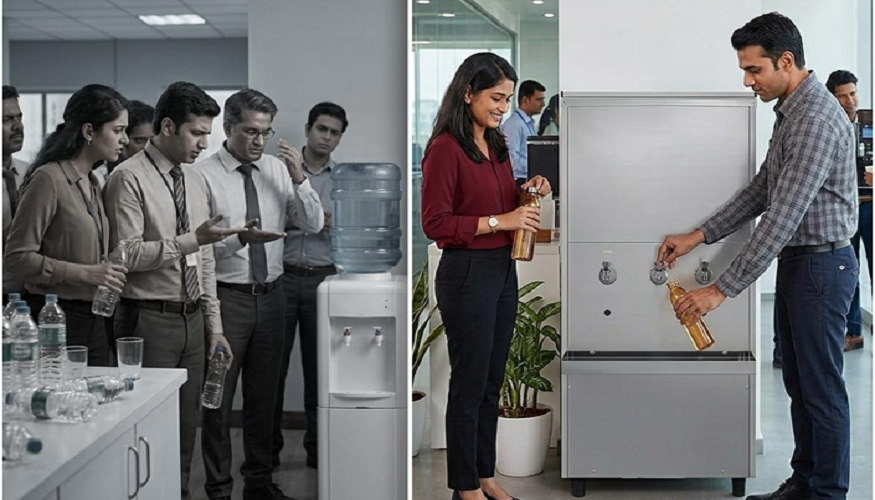
Not every office has the same drinking water requirements. A small workplace with 15 employees will have very different water needs from a large corporate office or a hospital employing 100-200 people. That is why choosing the right water cooler
capacity involves careful deliberation.
Understanding how much water your employees consume can help you select a system that may provide chilled drinking water efficiently.
Why Water Cooler Capacity Matters
Capacity has a direct bearing on how well a water cooler performs throughout the day. If the water cooler cannot keep up with the demand, employees may have to find alternatives in the form of bottled water. At the same time, opting for a much larger model than you actually require can lead to higher operating costs.
Read More: Crafting Experiences That Make Brands Memorable
A properly sized water cooler can help maintain a steady supply of drinking water and allow the system to operate efficiently without being put under unnecessary strain.
Factors Influencing the Right Capacity Water Cooler
There are certain factors that may influence the right capacity for your workplace. These factors include:
1. Daily Water Consumption
The number of people in your office is usually one of the factors that determines how much water is used every day. For instance, a team of 10 people will naturally have different requirements from an office with 50 or more employees. It is important to note that daily usage is not confined to the employee count. On some days, there are client visits that may increase the water usage.
Another point to keep in mind is the seasonal change with which the water intake changes. People may consume more water during hot summer months.
2. Type of Workplace
A corporate office will have different water consumption needs compared to a hospital, factory, school, or restaurant. This is because people in corporate offices mostly spend their whole day sitting at their desks. Whereas hospitals or clinics usually require access to drinking water around the clock. Industrial environments may see higher consumption because of physically demanding work.
3. Storage Capacity and Cooling Capacity
Storage capacity refers to how much water a system can hold, while cooling capacity indicates how much chilled water it can produce in an hour.
For instance, a water cooler with a large tank but a lower cooling rate may struggle during periods of heavy usage. The stored water can be used up quickly, leaving the unit with little time to chill more water.
Read More: How to Protect Your Home after Unexpected Flooding
That is why both storage and cooling capacity need to be considered together.
4. Installation Space
Offices with limited floor space may benefit from smaller or wall-mounted models. Make sure there is enough space around the unit for ventilation and routine maintenance.
5. Build Quality
Models with stainless steel bodies are often preferred in offices and commercial settings because they are resistant to corrosion, easy to clean, and built to withstand regular use.
6. Ease of Maintenance
Regular cleaning and timely servicing are essential for maintaining hygiene and ensuring consistent performance. Choosing a model with easily accessible components can make routine maintenance simpler and minimise disruptions.
Conclusion
There is no single water cooler that is suitable in every place. Take the time to understand your office’s water consumption patterns. It can help you avoid unnecessary costs while ensuring a dependable supply of chilled drinking water. A drinking water cooler
that matches your requirements can support day-to-day convenience and deliver better results.
One thought on “How Do I Choose the Right Water Cooler Capacity for My Office?”