
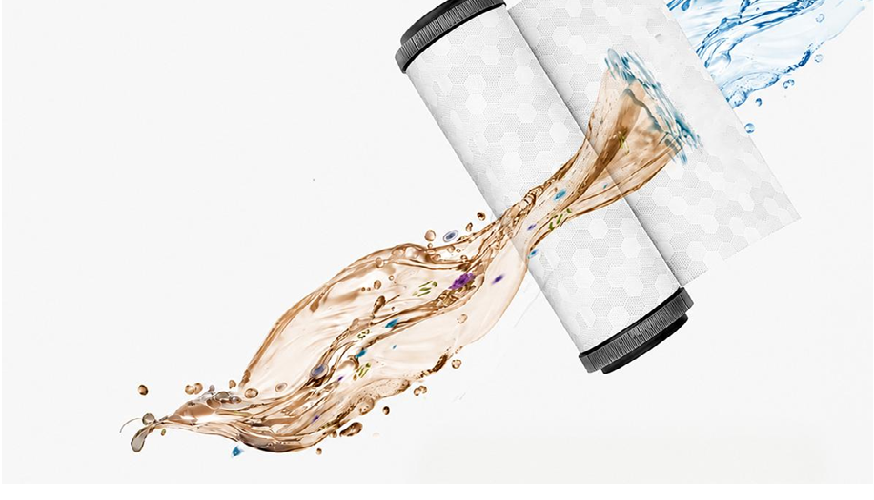
Tap water may appear clean, but it can still contain dissolved contaminants, heavy metals, chemicals, and microorganisms that may affect its quality and safety. For this reason, many households rely on a reverse osmosis (RO) filter to improve drinking water quality and taste.
However, understanding the effectiveness of an RO filter is only part of the equation. Knowing how the filtration technology works is equally important. Learning how reverse osmosis functions can make it easier to choose a purifier that suits your water conditions and daily household requirements.
What is Reverse Osmosis?
Reverse osmosis refers to the process of passing water through a semipermeable membrane to provide filtered water for consumption. RO separates dissolved solutes from water, such as arsenic, lead, salts, and minerals. These water purifiers are commonly installed in areas where the water has high total dissolved solids (TDS) levels, generally above 500-1000 ppm, to help reduce hardness, improve taste, and remove microorganisms such as bacteria and viruses that could pose health risks over long-term use.
Read More: LED Pendant Lights for Dining Areas
Stages of the RO Filtration Process
RO water purifiers use multiple filtration stages, with each filter serving a specific function to improve water quality and safety. However, these stages may differ with different models.
1. Sediment pre-filtration
This stage removes dust, sand, rust, and dirt from the water. It helps prevent clogging inside the purifier and reduces the risk of damage to the RO membrane.
2. Activated carbon filtration
Activated carbon filtration focuses on improving water quality and taste. It reduces chlorine and harmful chemicals, removes unpleasant odour and taste, and helps extend the life of the RO membrane.
3. RO membrane purification
This is the main purification stage of the RO system. It helps filter dissolved salts, heavy metals (such as arsenic), and other contaminants like pesticides, while also reducing high TDS levels in the water.
4. Ultraviolet (UV)
The UV chamber uses ultraviolet light to disinfect water by targeting harmful bacteria and viruses.
5. Ultrafiltration (UF)
The UF filter removes fine suspended particles while retaining essential minerals.
6. Post-filtration and mineral adjustment
The final stage typically involves activated copper technology (which infuses copper ions into the drinking water) and alkaline technology (which increases the pH level of water to 8-9 by infusing alkaline minerals, such as calcium, magnesium, and potassium into the water ). These filters provide additional purification, improve taste and freshness, and restore essential minerals in some RO systems.
What Contaminants Can RO Filters Remove?
Some of the contaminants commonly removed by RO filters include:
- Heavy metals such as lead, arsenic, mercury, and copper
- Excess dissolved salts and minerals that increase Total Dissolved Solids (TDS) levels in water
- High fluoride content
- Chlorine, which can affect the taste and odour of the water
- Pesticides, herbicides, and chemical contaminants
- Microorganisms such as viruses and bacteria
Benefits of RO Water Purifiers
- Helps provide safer drinking water by reducing harmful impurities
- Lowers TDS and hardness, making water more suitable for household use
- Improves the taste and smell of water by removing chlorine and other pollutants
- Helps reduce reliance on bottled water, which may save money over time
- Offers a practical option for areas with high-TDS or poor-quality source water
Conclusion
RO water purification is one of the most widely used methods for reducing dissolved impurities, contaminants, and high TDS levels in drinking water. Its multi-stage filtration process helps improve water quality, taste, and overall safety for daily use.
Read More: Water Softener for Home: How to Choose the Right Capacity
Understanding how RO systems work can also help households compare features, maintenance requirements, and RO water purifier prices before making a purchase decision based on their water quality, daily usage, and long-term needs.