
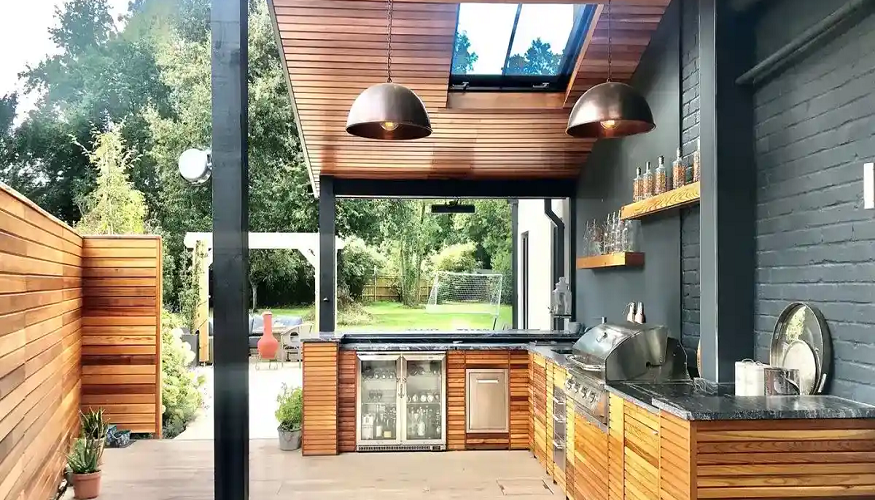
The outdoor kitchen has evolved far beyond a simple wheeled barbecue and a picnic table. It is now a sophisticated extension of the home’s living space, designed for entertaining, cooking, and enhancing the overall enjoyment of the backyard. When designing this coveted space, one of the most practical and flexible approaches involves using modular configurations. Modular outdoor kitchen systems consist of pre-designed, ready-to-install units—such as cabinets, grill bases, sink stations and refrigeration units—that can be arranged in various layouts. Choosing the right custom modular outdoor kitchens
layout is not just an aesthetic decision; it’s an engineering challenge that must optimize workflow, maximize space utilization, and seamlessly integrate with the home’s existing architecture.
The decision of which modular configuration is best for your space hinges on three key factors: the size and shape of the available area, the intended function (casual grilling versus full-scale entertaining), and the budget. By adopting the same design principles used for indoor kitchens—primarily the concept of the “work triangle”—homeowners can create an outdoor cooking space that is both beautiful and highly efficient.
The Fundamental Layouts: Optimizing the Work Triangle
Just as in an indoor kitchen, an effective outdoor kitchen configuration should minimize the distance between the primary work zones: the grill (cooking), the sink (prep/cleanup), and the refrigerator (storage). These core layouts provide the structural basis for most modular designs.
1. The Straight-Line (One-Wall) Configuration
The most compact and space saving layout is the straight-line kitchen. All modular components—grill, counter space, sink, and storage—are arranged along a single, continuous wall or perimeter.
- Best For: Narrow patios, small decks, or against an existing exterior wall of the home. It is excellent for maximizing limited space without obstructing traffic flow.
- Advantages: It is the most cost-effective layout because it minimizes the need for complex corner modules and often requires less extensive plumbing and electrical work since utilities can be run easily along a single line. It is easy to navigate and highly functional for small gatherings and routine grilling.
2. The L-Shape Configuration
The L-shape is formed by arranging the modular units along two perpendicular walls, meeting at a 90-degree angle. This is perhaps the most popular and versatile outdoor kitchen layout.
- Best For: Medium to large patios or corners of a deck where traffic needs to flow around the cooking area.
- Advantages: It creates a highly efficient work triangle, allowing the cook to pivot easily between the grill, prep area, and refrigeration. The L-shape naturally separates the cooking zone from the traffic zone, enhancing safety. It provides ample counter space for food preparation and serving. The corner unit can be utilized for a specialized appliance like a pizza oven or a corner sink module.
3. The U-Shape (Galley) Configuration
The U-shape layout utilizes three continuous walls of modular units, providing the maximum amount of counter space, storage, and appliance integration.
- Best For: Large outdoor areas where the kitchen is the primary focal point, and the homeowner plans to host large groups or incorporate multiple cooking appliances (e.g., grill, side burner, smoker, pizza oven).
- Advantages: It creates the most enclosed and efficient workspace, resembling a full indoor kitchen. The cook is surrounded by all necessary components, minimizing movement. It offers excellent differentiation between cooking, prep, and serving zones.
Conclusion: Function Dictates Form
Choosing the right modular outdoor kitchen layout is a matter of matching function to form within the constraints of your space. Whether you opt for the space-saving Straight-Line, the efficient L-Shape, or the expansive U-Shape, the guiding principle must be the efficiency of the work triangle. By selecting a high-quality, weather-appropriate material and integrating essential modules like a bar or island, you can transform your backyard into a highly functional, beautiful, and lasting entertainment extension of your home. The right modular configuration ensures that your focus remains on the joy of cooking and entertaining, not on maneuvering in a cramped, poorly designed space.